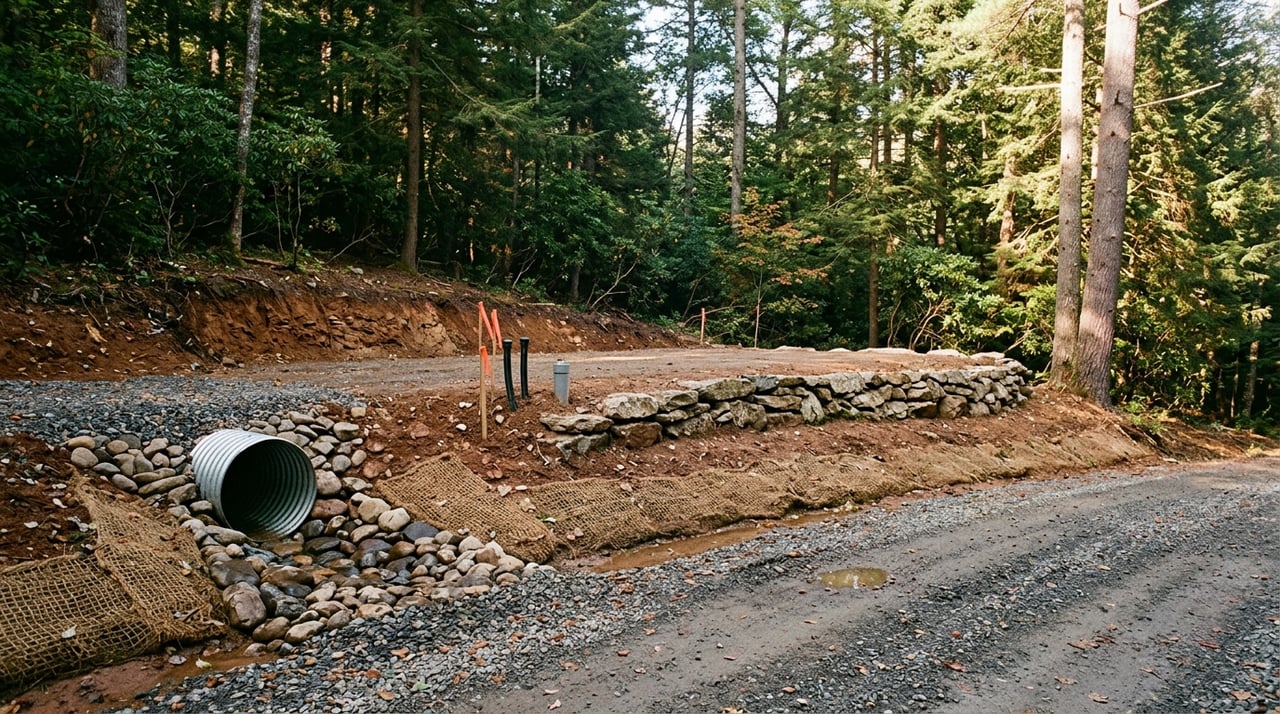
Thinking about building on mountain land in Ashe County? The exciting part is easy to picture: the homesite, the views, and the finished cabin or full-time home. The part that surprises many buyers is how much has to happen before you can truly call a parcel ready to build. This guide walks you through the local steps, approvals, and timing issues that matter most in the 28629 area so you can plan with more confidence. Let’s dive in.
What “ready to build” really means
In Ashe County, closing on the land is only the beginning. The county requires a building permit before construction starts, and other approvals may need to come first, including floodplain review, town zoning, Environmental Health compliance, and in some cases engineering, surveying, and elevation certificates.
That matters even more on mountain land. Ashe County sits at roughly 3,000 feet in elevation, so access, drainage, and site preparation can affect your timeline early. A parcel that looks straightforward online may still need several local checks before the building site is finalized.
Start with the right local offices
If you want to avoid delays, begin by confirming which local offices will be part of your project. In most Ashe County builds, that means more than one department.
Ashe County Building Inspections
Building Inspections handles building code compliance and helps confirm whether your project needs a permit before work begins. For a new dwelling, the county says buyers should already have septic and well permits from the health department, along with dwelling plans, the lien agreement, and other required permit forms before applying for the building permit.
Ashe County Planning
Planning is a key stop for land-use questions and floodplain review. The county directs buyers to check whether a parcel is in a Special Flood Hazard Area, and there is a Floodplain Development Permit process when applicable.
The county also notes that no structures can go in the floodway. That means your preferred build spot may need to change if floodplain constraints affect the property.
AppHealthCare Environmental Health
Environmental Health handles septic-system permitting and the private well program for Ashe County. This is one of the most important early steps because septic and well approvals are not something to leave until after your house plans are finalized.
Site suitability is part of the review. Soil conditions, topography, available space, water features, nearby water supplies, and potential contamination sources can all affect what is possible on the land.
E911 Addressing
E911 Addressing assigns physical addresses for properties in Ashe County outside Jefferson and West Jefferson. This step becomes important for permitting, utility coordination, and the final stages of construction.
Blue Ridge Energy
Blue Ridge Energy provides electric and propane service in Ashe County. Utility setup is its own process, and it needs to be coordinated alongside your permits, inspections, and site access.
Prepare the site before applications
One of the biggest mistakes buyers make is assuming the paperwork comes first and the site details can be figured out later. In reality, several local approvals depend on having the property physically prepared for review.
Mark lines and stake the site
AppHealthCare’s septic and well checklist lays out the kind of prep that should happen early. Property lines and irons should be marked on site, the proposed house site should be staked, the well site should be staked, and the driveway should be marked.
You should also be prepared to provide a survey plat or schematic and a site plan. These items help the county, Environmental Health staff, and your other vendors evaluate whether the proposed layout works for the property.
Call 811 before digging
Before any excavation or trenching starts, NC811 says you should contact 811 at least three working days ahead of digging. The utility-marking service is free, and AppHealthCare’s checklist says the 811 ticket number should be included on the application.
This is especially important on mountain land where driveways, utility runs, and grading often happen early. Skipping this step can create delays and unnecessary risk.
Handle septic and well approvals early
For many mountain parcels, septic and well approvals shape the entire build plan. They are not a minor item on the checklist. They are often one of the first true tests of whether your intended homesite works as planned.
Why septic can affect your plans
Environmental Health determines site suitability during soil and site evaluation. That review looks at the property’s soils, slope, topography, space, water features, and other factors that may affect system placement.
In practical terms, that means your preferred house location, driveway, or well site may need to shift. It is often smart to involve your surveyor, builder, and Environmental Health staff before locking in final house plans.
Timing matters here
AppHealthCare says wait times for a finished permit can vary based on the number of active applications, weather, the availability of installers, contractors, and surveyors, and legal agreement requirements. In other words, even organized buyers should build extra time into the schedule.
The same checklist says an Improvement Permit can be valid for five years, or it may be nonexpiring if the plat meets requirements. That can be helpful if you are buying now and building later, but you still need to confirm your specific situation.
Check floodplain and access issues
A beautiful mountain parcel can still come with practical limits. Before you commit to a build plan, verify whether floodplain rules or access issues could affect the homesite.
Floodplain review in Ashe County
Ashe County Planning directs buyers to check whether the property is in a Special Flood Hazard Area. If it is, you may need additional review through the county’s Floodplain Development Permit process.
That extra step can affect where you place the structure and how quickly plans move forward. It is much better to learn that upfront than after investing time and money in a layout that needs revision.
Road access and easements
Utility providers and inspectors need practical access to the site. If easements, road access, or driveway plans are not resolved early, the next approval may stall.
This is one reason mountain-land projects often benefit from close coordination between the buyer, surveyor, builder, utility providers, and local offices. One missing piece can slow everything behind it.
Understand the E911 address timeline
Many buyers assume the property address is assigned as soon as they buy the land. In Ashe County, the timing is more specific for new builds outside Jefferson and West Jefferson.
According to E911, the buyer first needs to satisfy permit requirements such as a perk test, obtain a building permit, and then have E911 take GPS measurements after the footers and driveway are in place. The office says the address is typically issued within five working days after those measurements are taken.
That timing matters because utility work often depends on having the 911 address or detailed directions to the site. If you wait too long to understand the address sequence, you may create delays later in the project.
Coordinate electric service before the finish line
Power is not something to schedule at the very end and hope for the best. Blue Ridge Energy treats new service as a separate process with its own paperwork and requirements.
What Blue Ridge Energy needs
For new electric service, Blue Ridge Energy says all paperwork must be completed before service can be provided. That can include the service application, easements, county or city inspections, applicable fees, and any required underground service agreements.
The cooperative also asks for the subdivision name, lot number, and 911 address or detailed directions to the building site, along with daytime phone numbers for the owner and contractors. After the application is submitted and required inspections are complete, customers are instructed to call the district coordinator to schedule the work.
Why the final approvals still matter
AppHealthCare’s checklist notes that the Operation Permit is needed to receive the Certificate of Occupancy. It also says the Certificate of Occupancy is required for power to be turned on.
That is a good reminder that final inspection does not automatically mean every later approval is done. The closeout stage can still control your move-in timeline.
Common delays to avoid
If you want to keep your project moving, watch for these common slowdowns:
- Missing or incomplete survey, site plan, or property staking
- Waiting too long to begin septic and well conversations
- Skipping the 811 locate step before excavation
- Not resolving easements, road access, or address assignment early enough for utility work
- Assuming final inspection means every later approval is already complete
On mountain land, small delays can stack up quickly because so many steps depend on one another. A more coordinated plan usually saves time, money, and stress.
A practical build sequence for Ashe County land
If you are preparing to build on Ashe County mountain land, this is the safest general order based on local requirements:
- Confirm planning, zoning, and floodplain questions
- Line up survey work, site staking, and driveway layout
- Start septic and well permitting early
- Call 811 before any digging or trenching
- Apply for the building permit once required approvals and documents are ready
- Coordinate E911 addressing at the appropriate stage
- Work through utility setup and required inspections
- Complete final occupancy steps before expecting power activation and move-in
Every property is different, but the main lesson stays the same. The smoothest projects treat the county, Environmental Health, surveyor, builder, and utility provider like one coordinated team.
If you are buying mountain land in the 28629 area, local guidance can make a real difference. Chris Barr’s local roots, land experience, and vendor coordination knowledge can help you ask better questions before you buy and avoid costly surprises after closing. When you are ready to plan your next step, connect with Chris Barr.
FAQs
What does ready to build mean in Ashe County mountain land?
- It usually means more than owning the parcel. You may need a building permit, septic and well approvals, floodplain review, zoning confirmation, and other site-specific items before construction can begin.
Do Ashe County buyers need septic and well permits before a building permit for a new dwelling?
- Yes. Ashe County says that for a new dwelling, septic and well permits from the health department should already be in place before applying for the building permit.
When is an address assigned for new construction in Ashe County?
- For properties outside Jefferson and West Jefferson, E911 says the address is assigned after permit requirements are met, the building permit is obtained, and GPS measurements are taken after the footers and driveway are in place.
Why can building on mountain land in Ashe County take longer than expected?
- Timing can be affected by weather, soil and site conditions, application volume, contractor and surveyor availability, and whether access, easements, staking, and utility coordination are handled early.
When should utility coordination start for Ashe County land builds?
- Early in the process. Blue Ridge Energy requires paperwork, inspections, and other project details before new electric service can be scheduled, so utility planning should not wait until the house is nearly finished.